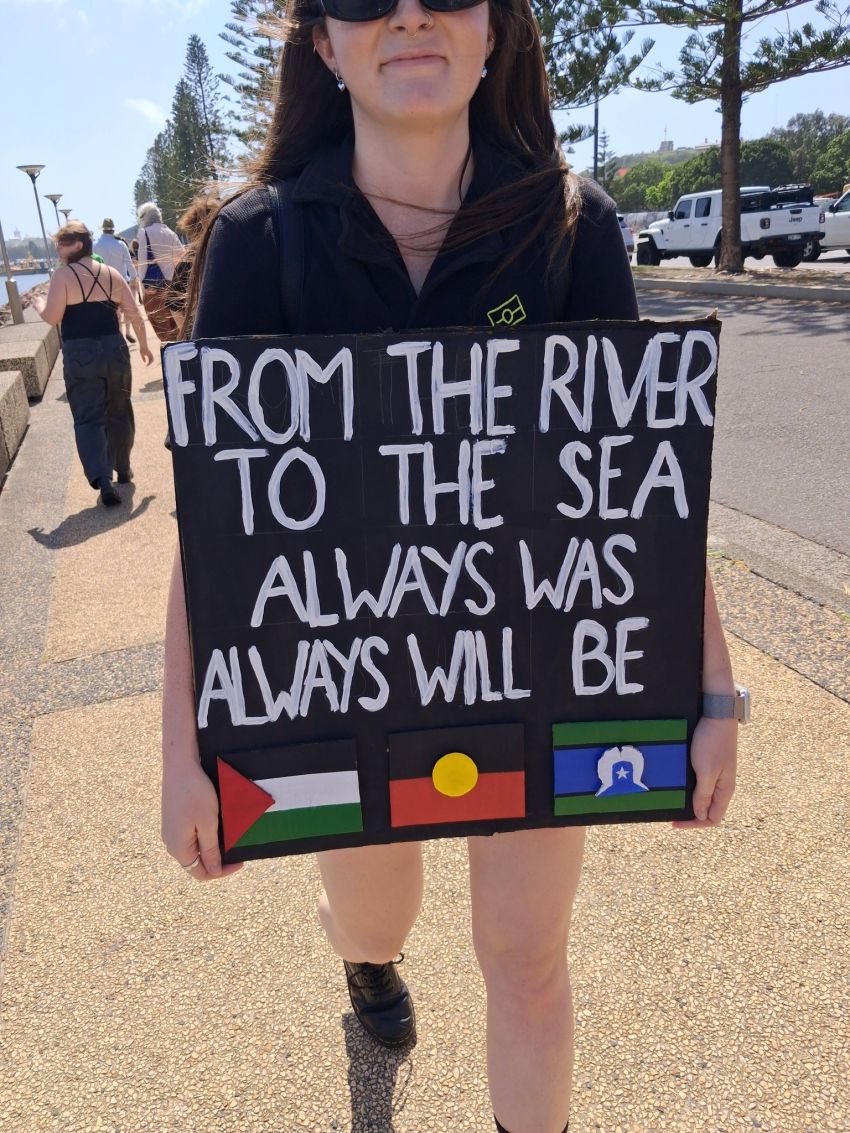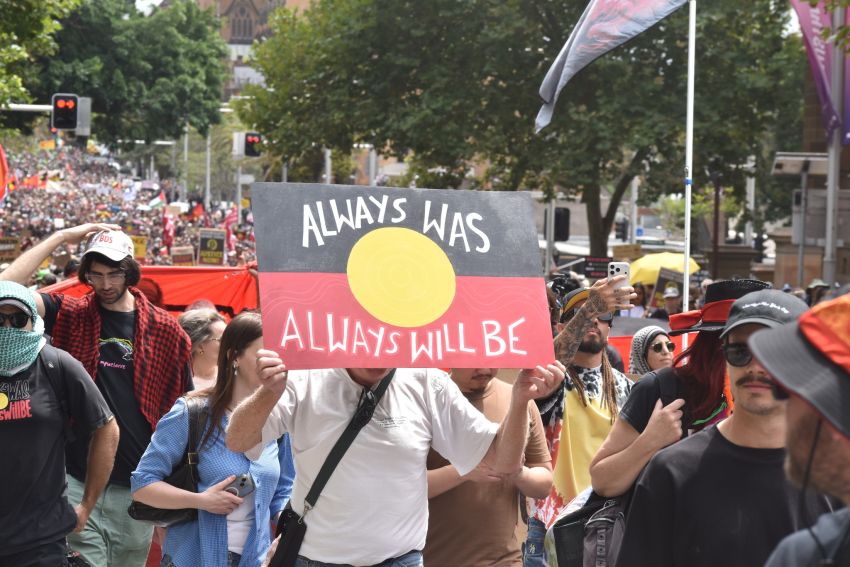
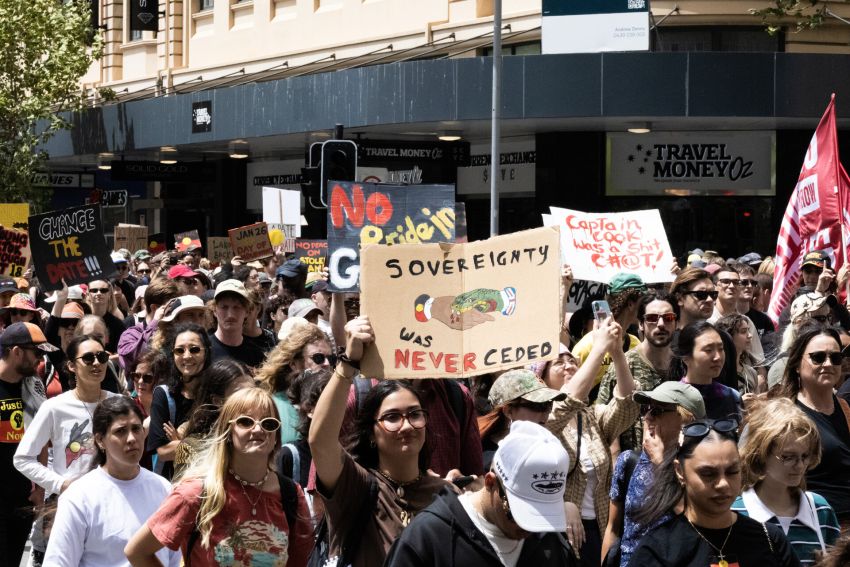
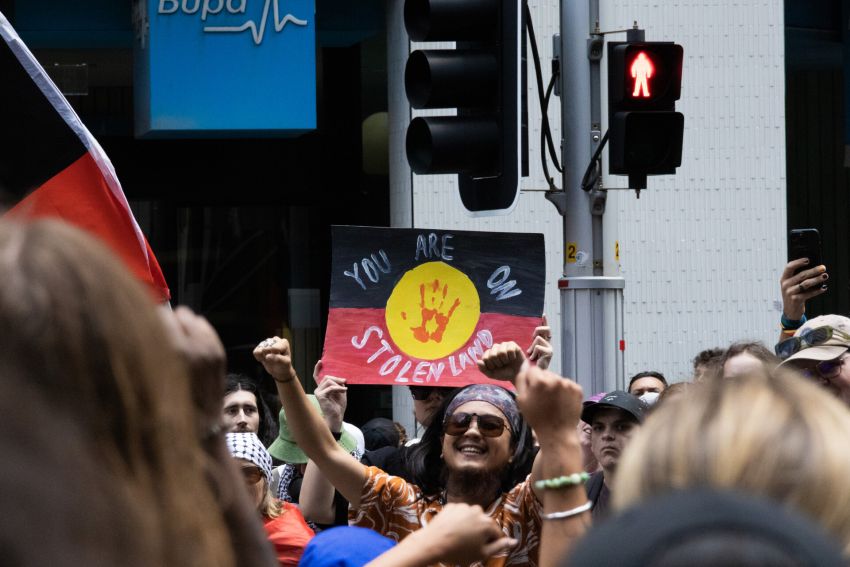
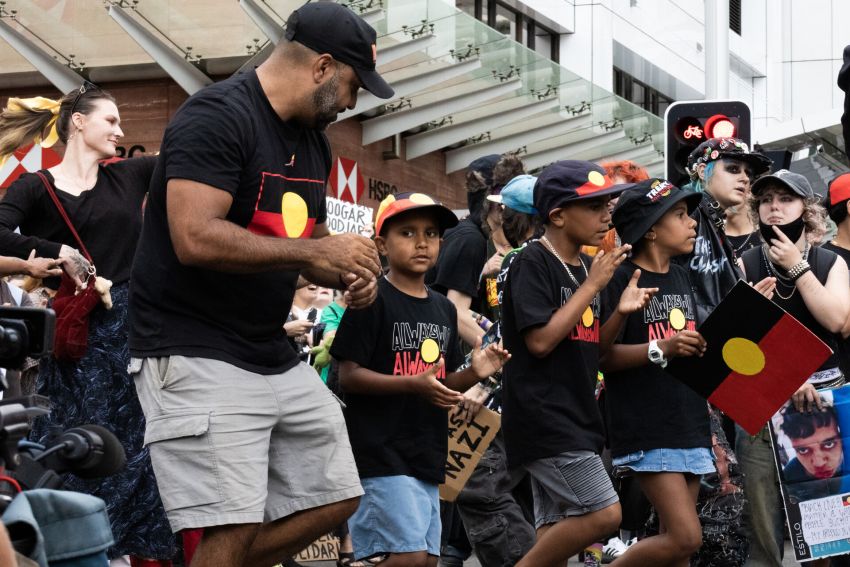
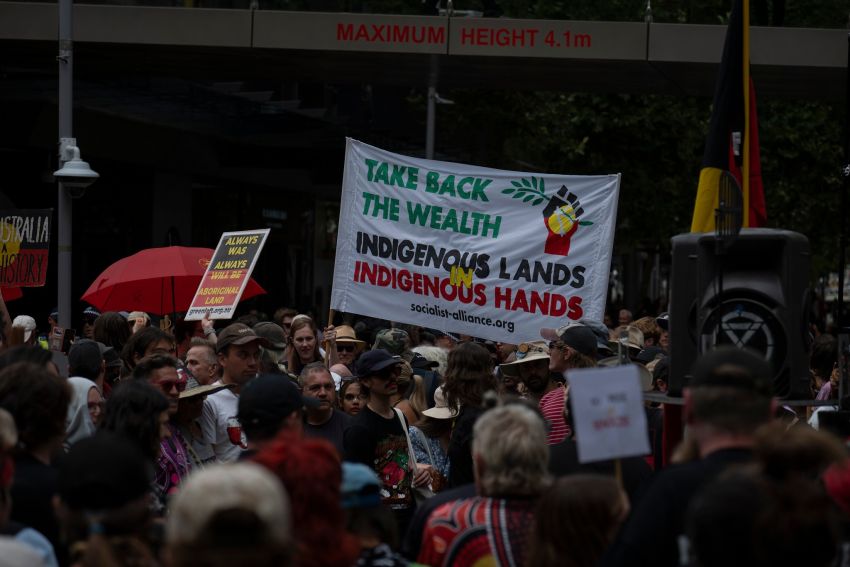
Invasion Day protests, organised by First Nations people across the country on January 26, were very large. This turnout, including many young people, represents a huge defeat for the racist, pro-genocide offensive by state and federal governments, and the far right.
The Blak Caucus organisers on Gadigal Country/Sydney said it was a Day of Mourning.
Speakers called for justice and accountability and drew the links between their struggle for justice and Palestinians’ just struggle against Israel’s colonialism.
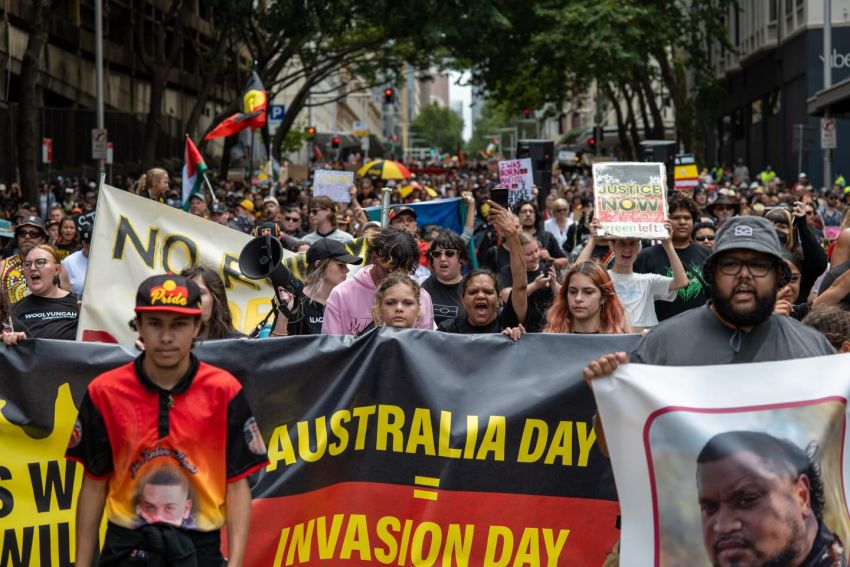
Warlpiri elder Uncle Ned Jampijinpa Hargraves, from the Northern Territory’s Yuendumu community, talked about his grandson’s death at the hands of police outside a supermarket last year. “He didn’t deserve to lose his life over one coke.”
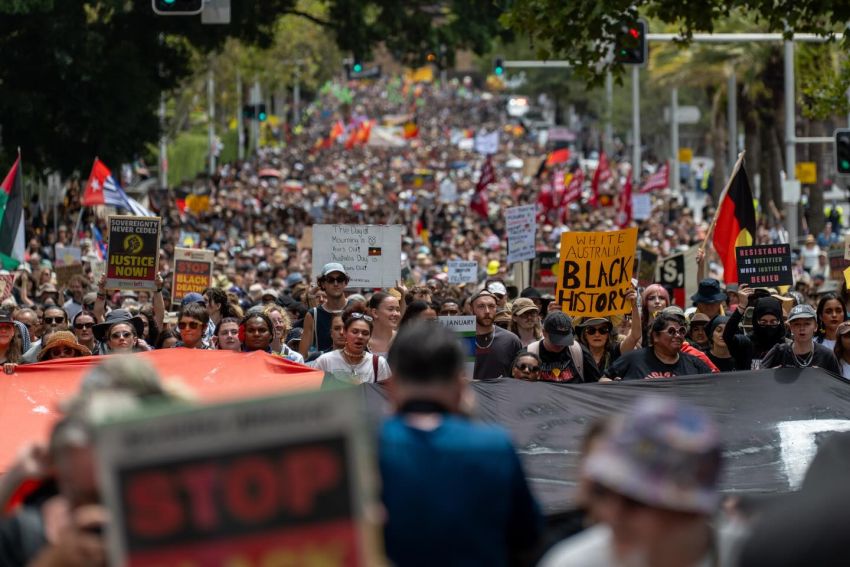
The huge and largely young crowd, which included many Arab-Australians, marched from Hyde Park to the Yabun Festival in Victoria Park.
Peter Boyle reports that several participants told Green Left that they sensed that this was another Sydney Harbour Bridge march moment — with up to 100,000 people on the streets. At the same time, a racist March For Australia rally at Prince Alfred Park drew only a few hundred people.
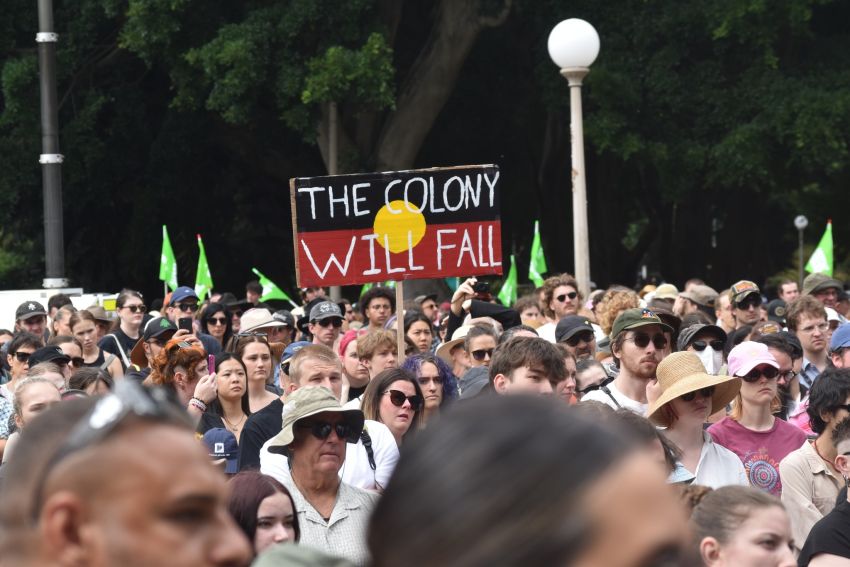
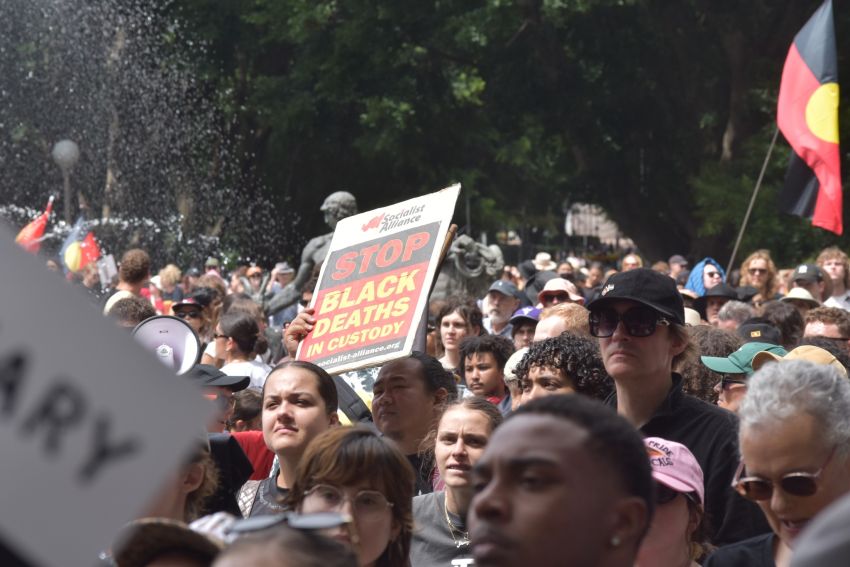
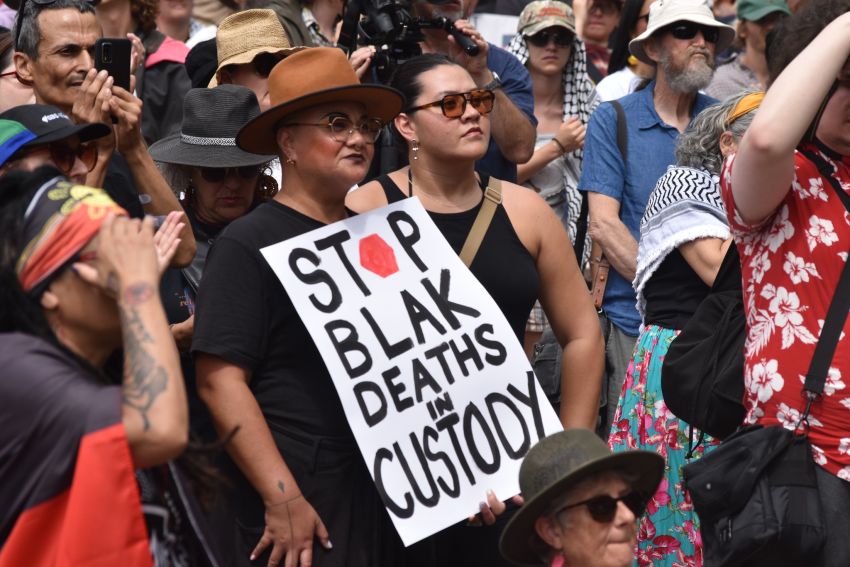
The protest in Djijang/Geelong, organised by Be Tru 2 Uluru Geelong, drew 1200 people, including activists from Free Palestine Geelong, Independent and Peaceful Australia Network Geelong & Vic South West, Geelong Rainbow, Socialist Alliance Geelong and Greens South West Region.
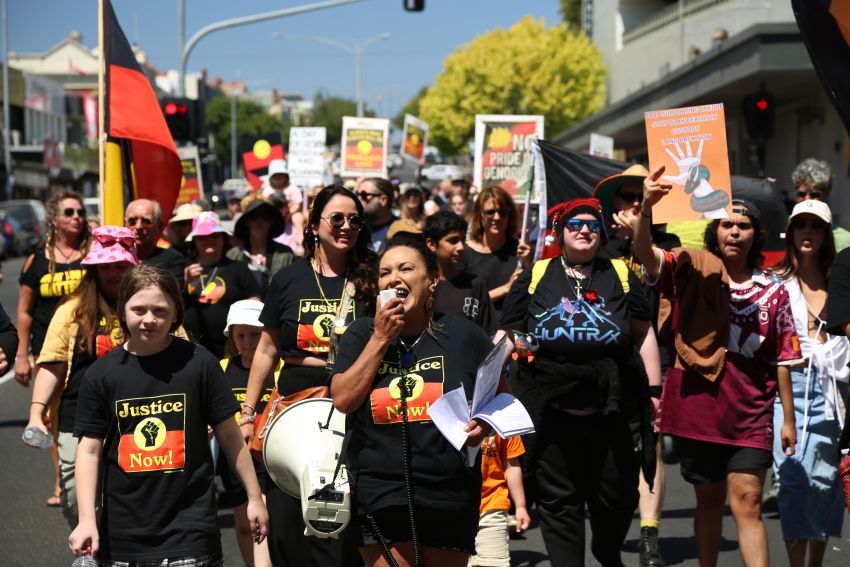
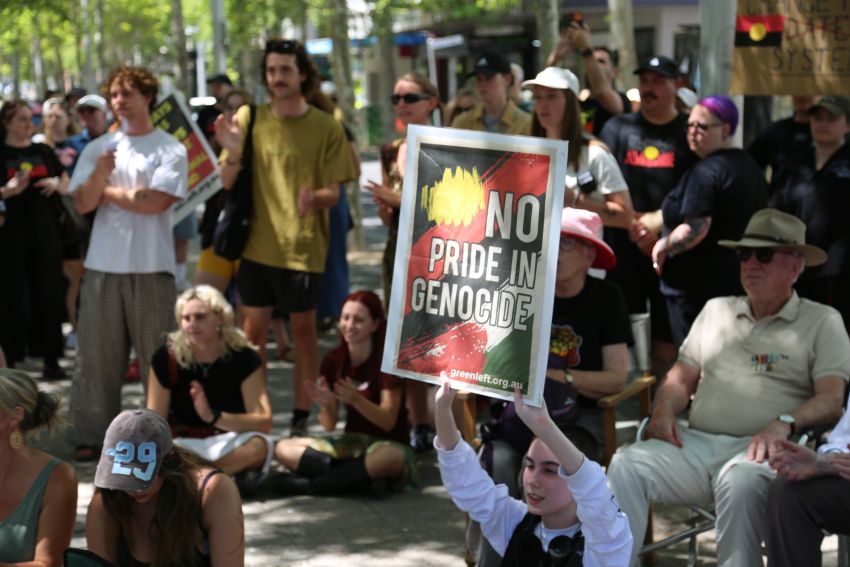
Sarah Hathway reports that the march called for land rights and sovereignty, and for the Treaty to be upheld. Others spoke about solidarity in the face of right-wing politicians keen to whip up racism and fear. Two drunk people abused people at the Green Left stall; police took their details but no charges were laid.
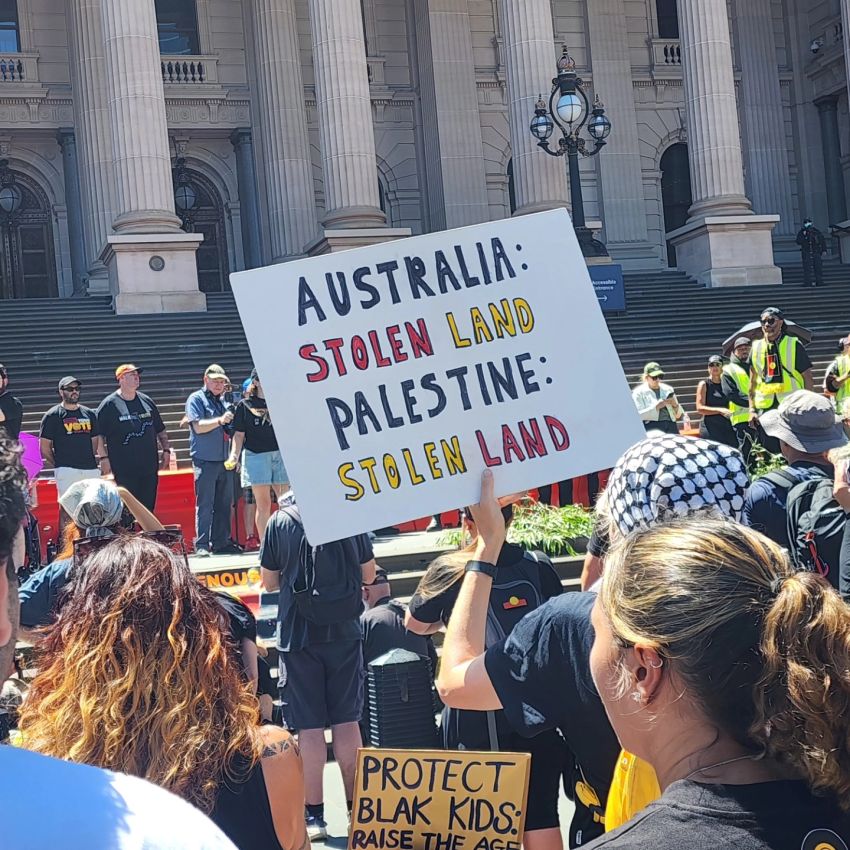
In Naarm/Melbourne, calls were made for January 26 to be recognised as a Day of Mourning for Aboriginal and Torres Strait Islander people rather than a celebration.
Chloe DS reports that after a Welcome to Country by Yalukit Willam of Boonwurrung, Jaeden Williams and several First Nations speakers, the protest marched from Parliament House in extreme heat to Flinders Street Station. There, they blocked the intersection to hear stories of survival, resistance, truth-telling and Treaty.
Uncle Robbie Thorpe, First Nations elder and a Camp Sovereignty organiser, told the crowd: “We took the brunt of colonialism and it’s really significant that our culture is still alive.”
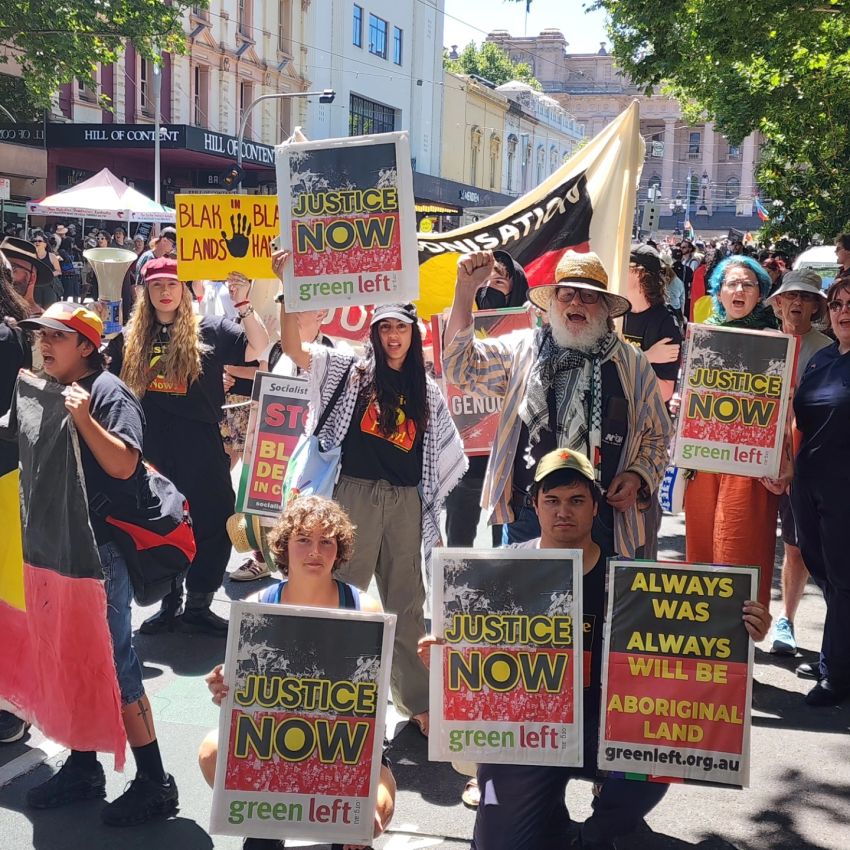
Banners called for “Decolonisation”, “Justice now” and “Take Australia to the International Criminal Court”. Another demanded justice for Kumanjayi White, a 24-year-old disabled Warlpiri man from Yuendumu, who died at the hands of police in a supermarket.
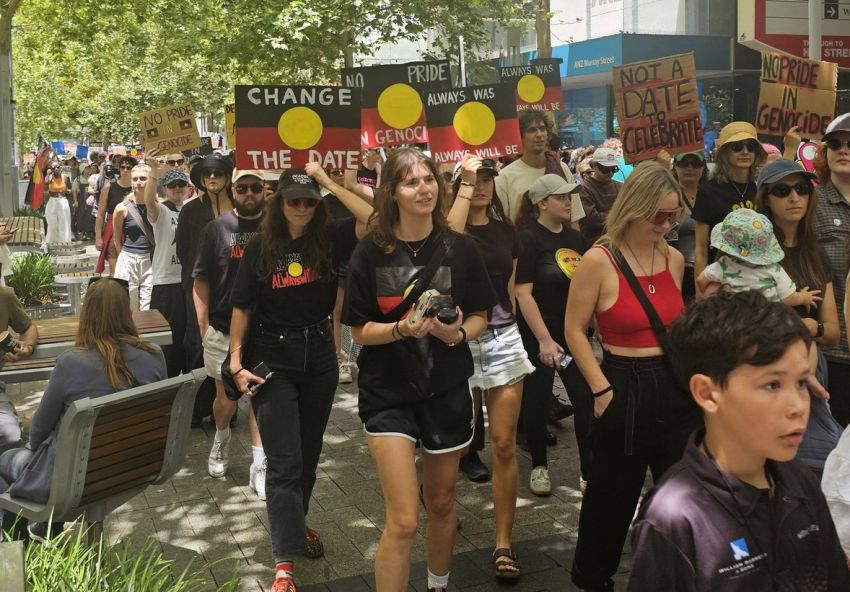
The crowd chanted “Hands off our land, knees off our necks”, “No pride in genocide”, “No justice, no peace, no racist police” and “Always was, always will be Aboriginal land!”.
Chloe DS said organisers estimated at least 100,000 people took to the streets.
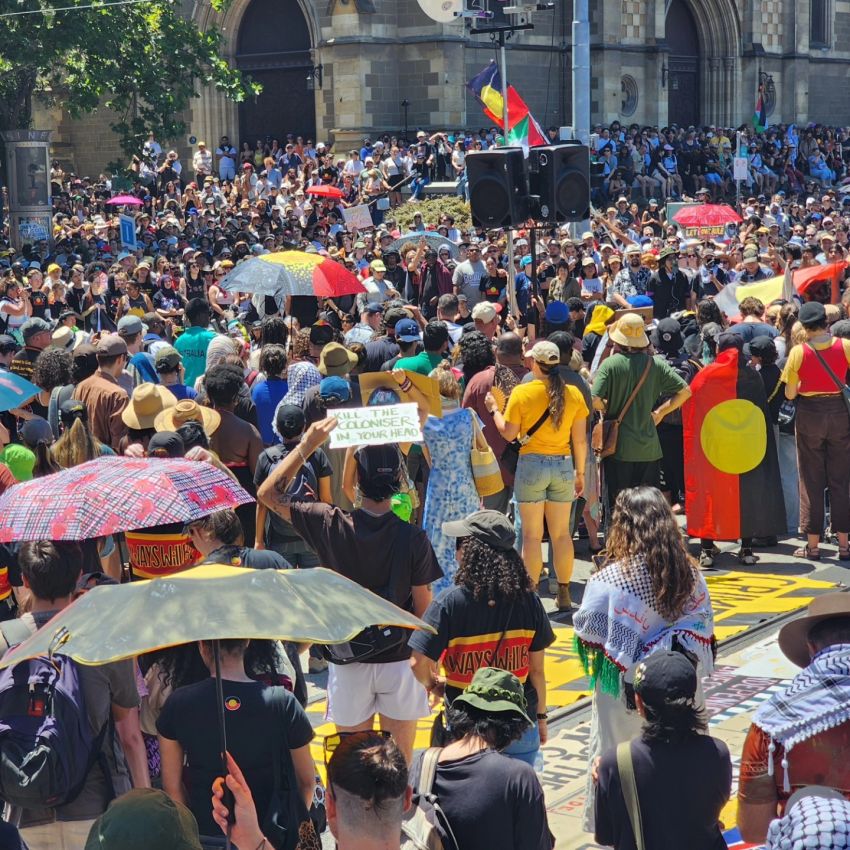
Arrernte woman Celeste Liddle, who MCed, highlighted the need to fight Donald Trump and the United States war machine.
There were calls to support families whose loved ones had died in custody or who had had children removed by the state. Aunty Rieo Ellis said: “It’s sad that Grandmothers Against Removals have to exist because our children are still being removed at a higher rate than non-Aboriginal children.”
Gumbaynggirr activist and historian Gary Foley said January 26 never used to be celebrated. “Until 1988, Australians didn’t really give a stuff about Australia Day,” he said, adding that this “new phenomenon” is being driven by the surge in right-wing nationalism. He also said the surge in support for Pauline Hanson’s One Nation was a “cautionary moment”.
Foley acknowledged the growing number of allies of First Nations people, who are coming out to these marches. He paid tribute to the younger generation that organises them, saying that for the last five years, they have been the “biggest marches anywhere in Australia”.
Invasion Day protest organiser Gunditjmara person Tarneen Onus Brown, who partially won a case in the Federal Court against the extraordinary powers given to Victorian Police, said that decision is a “significant win”, even if they “didn’t get everything we wanted”.
“This is a win for First Peoples and allies coming to the Invasion Day rally, and every person who comes into the CBD and designated areas who want to be treated with dignity and respect.”
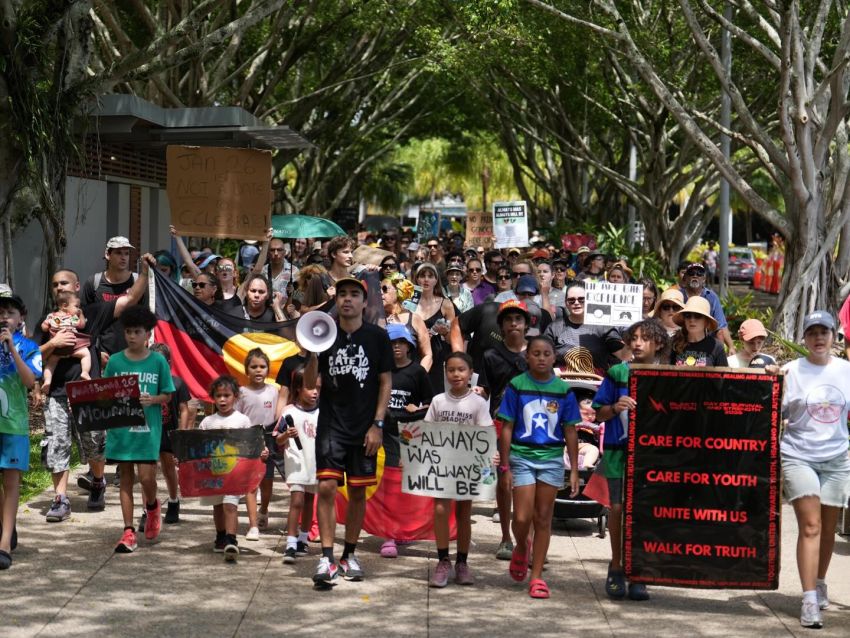
In Kaurna Yerta/Adelaide, Markela Panegyres reports that more than 1000 people marched in searing heat to demand justice for First Nations people.
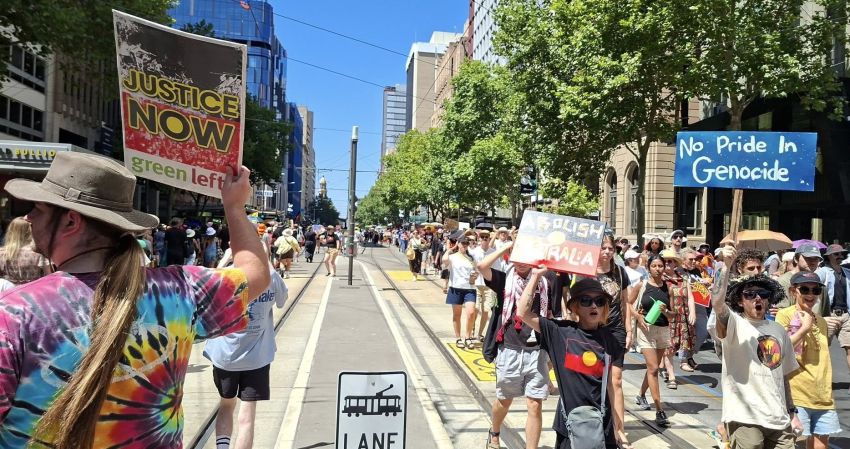
Thousands also marched in Magan-djin/Brisbane in sweltering heat. Speakers addressed the crowd in Queens Gardens before marching to Musgrave Park for a festival with music and more speakers.
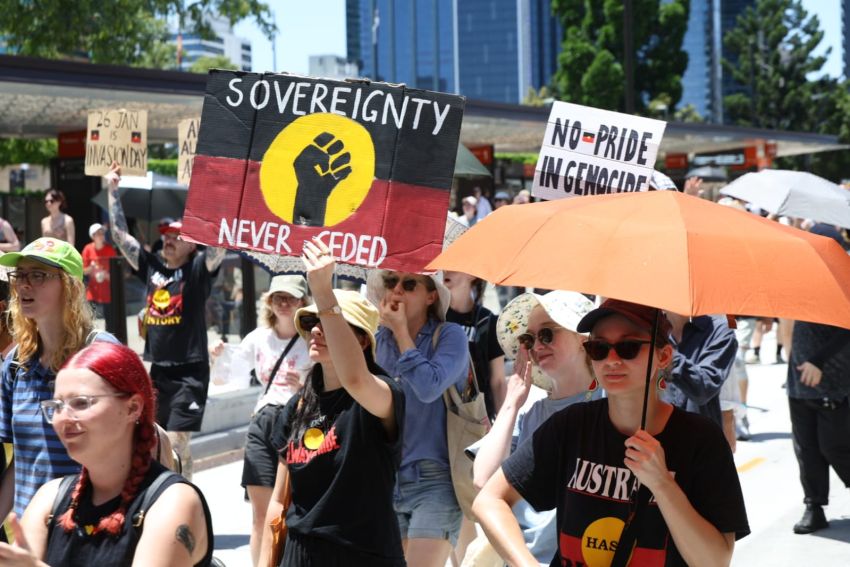
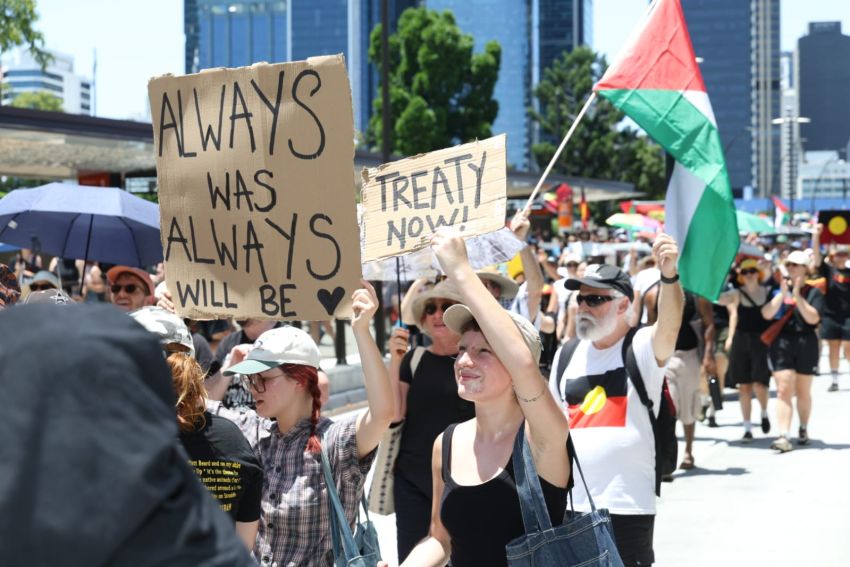
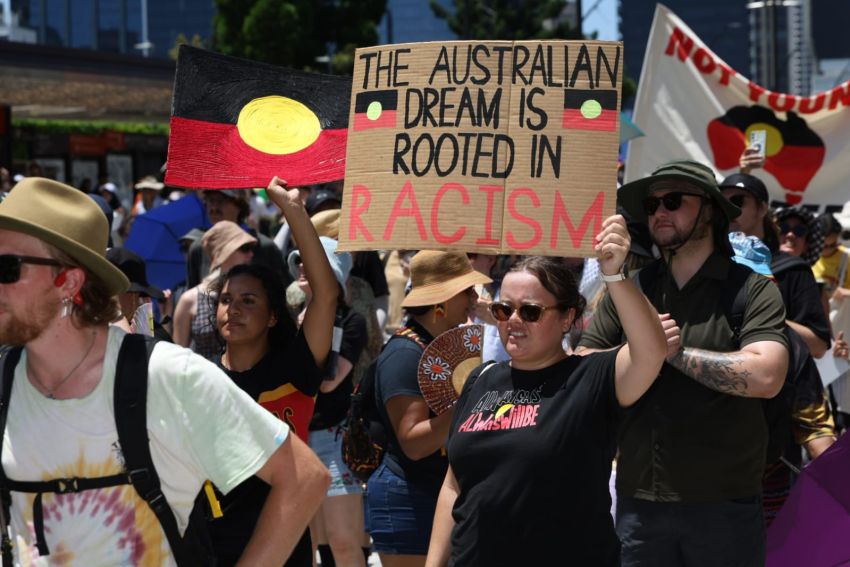
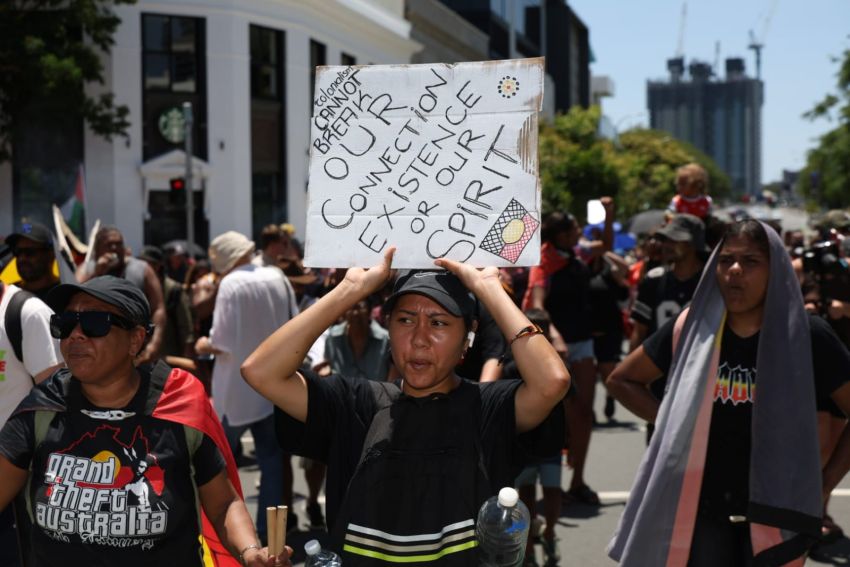
About 1000 people, including Palawa activists, Tasmanian Aboriginal Centre (TAC) activists and others, marched through the streets of nipaluna/Hobart chanting: “We won’t stop; We won’t go away; We won’t celebrate Invasion Day!”
A march was also organised in limilinaturi/Devonport.
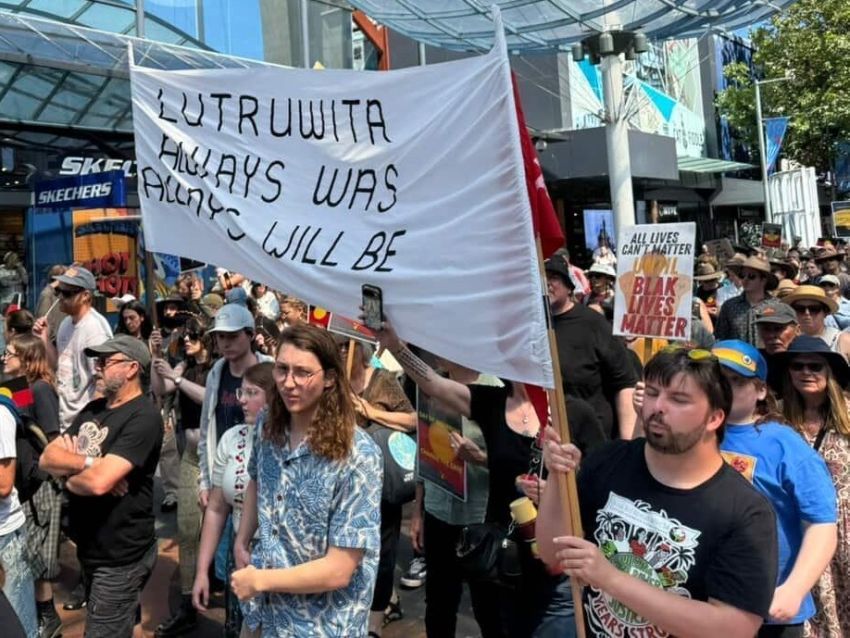
Solomon Doyle reports that outside parliament, TAC organiser Nala Mansell addressed the crowd. She recounted the Risdon Cove Massacre of May 3, 1804, when a large group of Aboriginal people, including men, women and children, were attacked and slaughtered by soldiers and settlers. An Aboriginal boy, aged about two or three, was captured by the colony’s surgeon Jacob Mountgarrett after his parents were killed.
Palawa activist Cody Gangell-Smith spoke about the ongoing need for truth-telling.
Greg MacFarlane reports that after the march, people listened in silence to ceremonial gun shots fired at noon. The crowd was reminded of what these sounds meant to the First Nations people and, as the firing continued, a list of massacres carried out by settlers across lutrawita was read out.
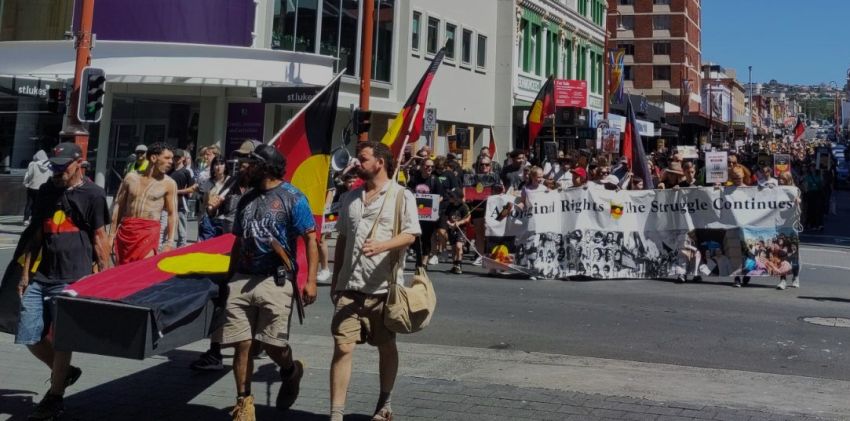
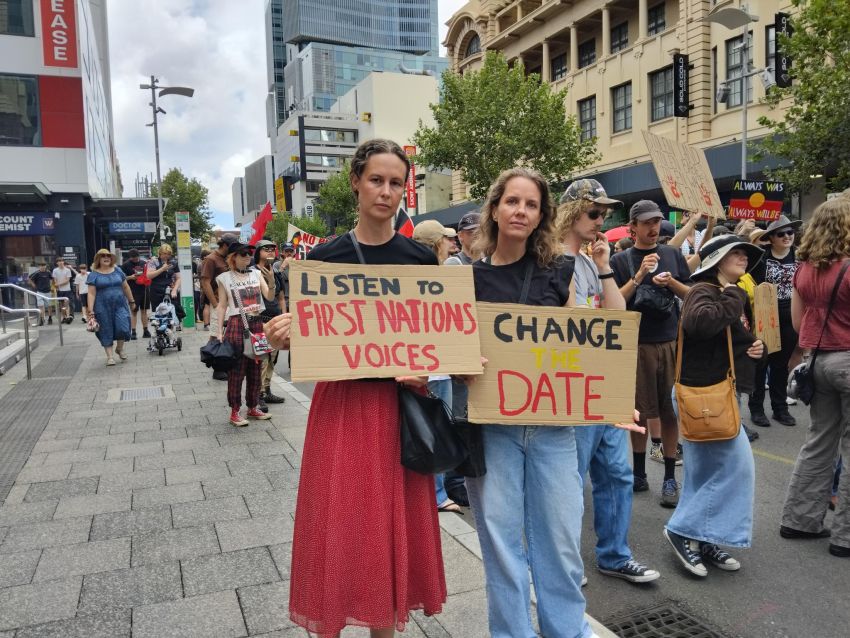
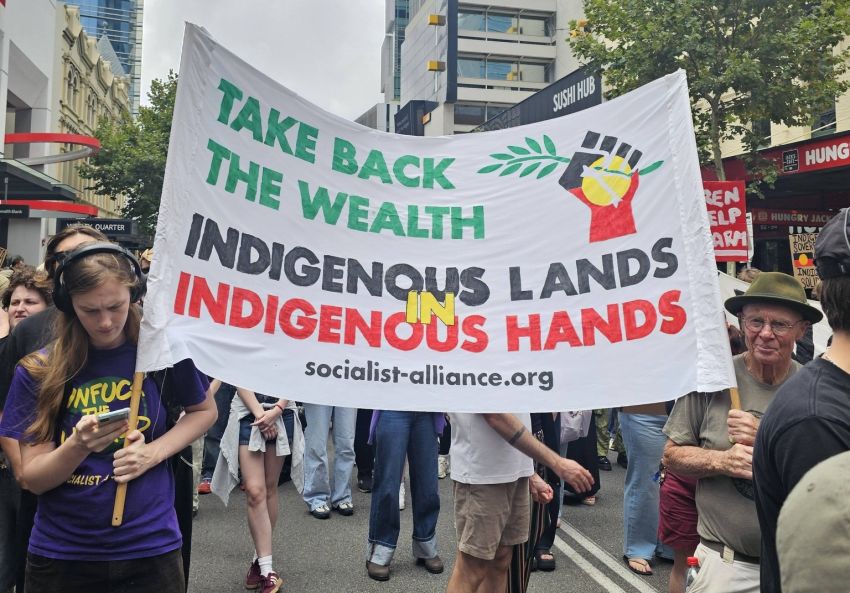
The Boorloo/Perth Invasion Day protest was interrupted when a man threw a homemade bomb into the crowd, landing near the stage. Blair Vidak reports that despite police disruption, with an aggressive temporary evacuation of Forrest Place, the march continued down William Street to the Stirling Gardens.
There, a yarning circle was held. There was music and dancing at every intersection the rally crossed.
Uncle Hedley Hayward, Uncle Herbert Bropho, Sam Wainwright from Socialist Alliance and Clint Uink from the Greens were among the speakers.
Since then the police and media have sought to downplay the political attack on an Invasion Day protest, which could have ended in tragedy.
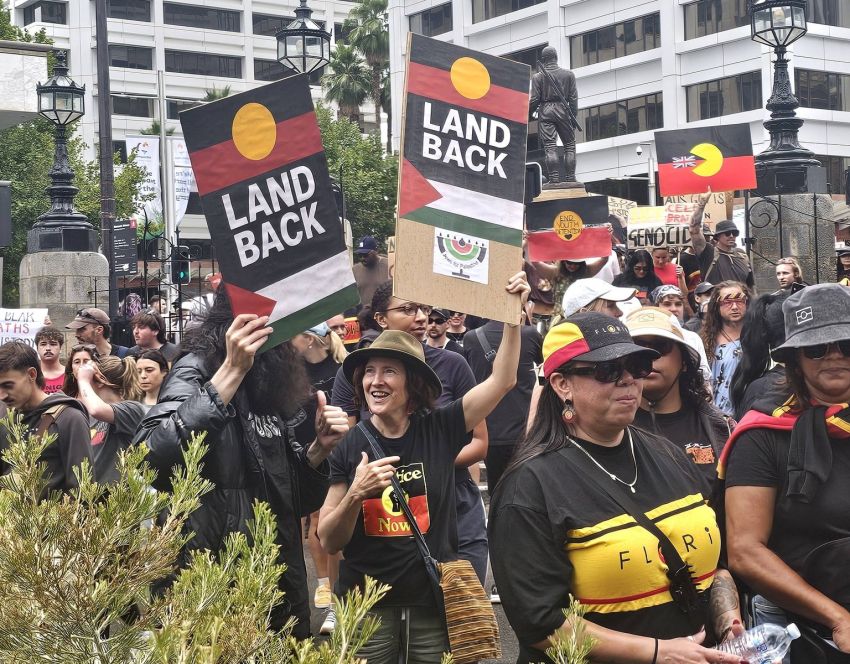
People came in Muloobinba/Newcastle’s Civic Park on Invasion Day even though the rally, called by students, had been cancelled, without explanation.
Steve O'Brien reports the rally heard from several speakers and then marched to the Foreshore, where convicts and their guards first landed in 1804.